
Report week: 7–13 September 2026 · Audience: women’s fashion only
This report uses a fully reconciled, single-gender TrendQ corpus slice. Women’s outerwear and bags gained outfit share, while dresses and accessories lost share, versus the preceding seven complete weeks. Every change is expressed in percentage points, never growth.
Executive merchant read: Put measured depth behind proven outerwear and bags, especially black options, while keeping dress and accessory receipts tighter. Use white tops as the stable connector. Only the four qualified movements below justify directional language; imagery is qualitative context, not the sample.
Signal table
| Category | Current vs seven-week baseline |
|---|---|
| Outerwear | 24.3% (276/1,136) vs 17.4% (1,222/7,039); +6.94 pp · Qualified, 178 current creators, q=0.045 |
| Dresses | 22.0% (250/1,136) vs 25.9% (1,821/7,039); −3.86 pp · Qualified, 162 current creators, q=0.039 |
| Bags | 43.8% (497/1,136) vs 40.0% (2,815/7,039); +3.76 pp · Qualified, 263 current creators, q=0.039 |
| Bottoms | 57.0% (647/1,136) vs 53.2% (3,746/7,039); +3.74 pp · Not qualified, q=0.137 |
| Shoes | 43.8% (498/1,136) vs 40.6% (2,857/7,039); +3.25 pp · Not qualified, q=0.137 |
| Accessories | 83.6% (950/1,136) vs 86.7% (6,104/7,039); −3.09 pp · Qualified, 373 current creators, q=0.039 |
| Tops | 67.3% (765/1,136) vs 64.4% (4,533/7,039); +2.94 pp · Below the 3 pp effect floor |
Baseline: seven complete weeks from 20 July–6 September 2026. Shares use deduplicated outfits as the denominator. Qualification requires an absolute change of at least 3 pp, sufficient counts, at least 20 current creators, and Benjamini–Hochberg FDR q≤0.10.
Category and color breakdown
The week contains 3,883 known-category observations across 1,136 deduplicated outfits. Of those, 3,429 carry at least one usable color label. Color percentages are current-week, within-category multi-label shares; they are descriptive, not movement claims.
| Category | Leading current colors and labelled count |
|---|---|
| Tops | White 42.6%; black 21.3%; blue 9.1% · n=761 |
| Bottoms | Blue 25.7%; black 21.8%; white 19.0% · n=646 |
| Shoes | Black 39.0%; brown 16.7%; white 15.9% · n=497 |
| Outerwear | Black 21.0%; brown 19.9%; beige 14.9% · n=276 |
| Dresses | Black 27.2%; white 23.8%; blue 15.1% · n=239 |
| Bags | Black 36.4%; brown 23.7%; white 9.5% · n=494 |
| Accessories | Black 51.7%; brown 27.3%; white 10.5% · n=516 |
1. Restock proven black outerwear selectively

Outerwear reached 24.3% of women’s outfits, +6.94 pp versus baseline after every qualification gate. Black leads its labelled current palette at 21.0%.
Restock and test: Add measured depth to proven black jackets and lightweight layers, then expand only where conversion, sell-through, stock, and returns support the signal.
2. Promote black bags inside complete-look stories

Bags reached 43.8% of outfits, a qualified +3.76 pp. Black leads labelled bag observations at 36.4%.
Promote and bundle: Pair black shoulder and crossbody bags with outerwear edits. Build depth from store demand rather than corpus prevalence alone.
3. Keep dress receipts measured
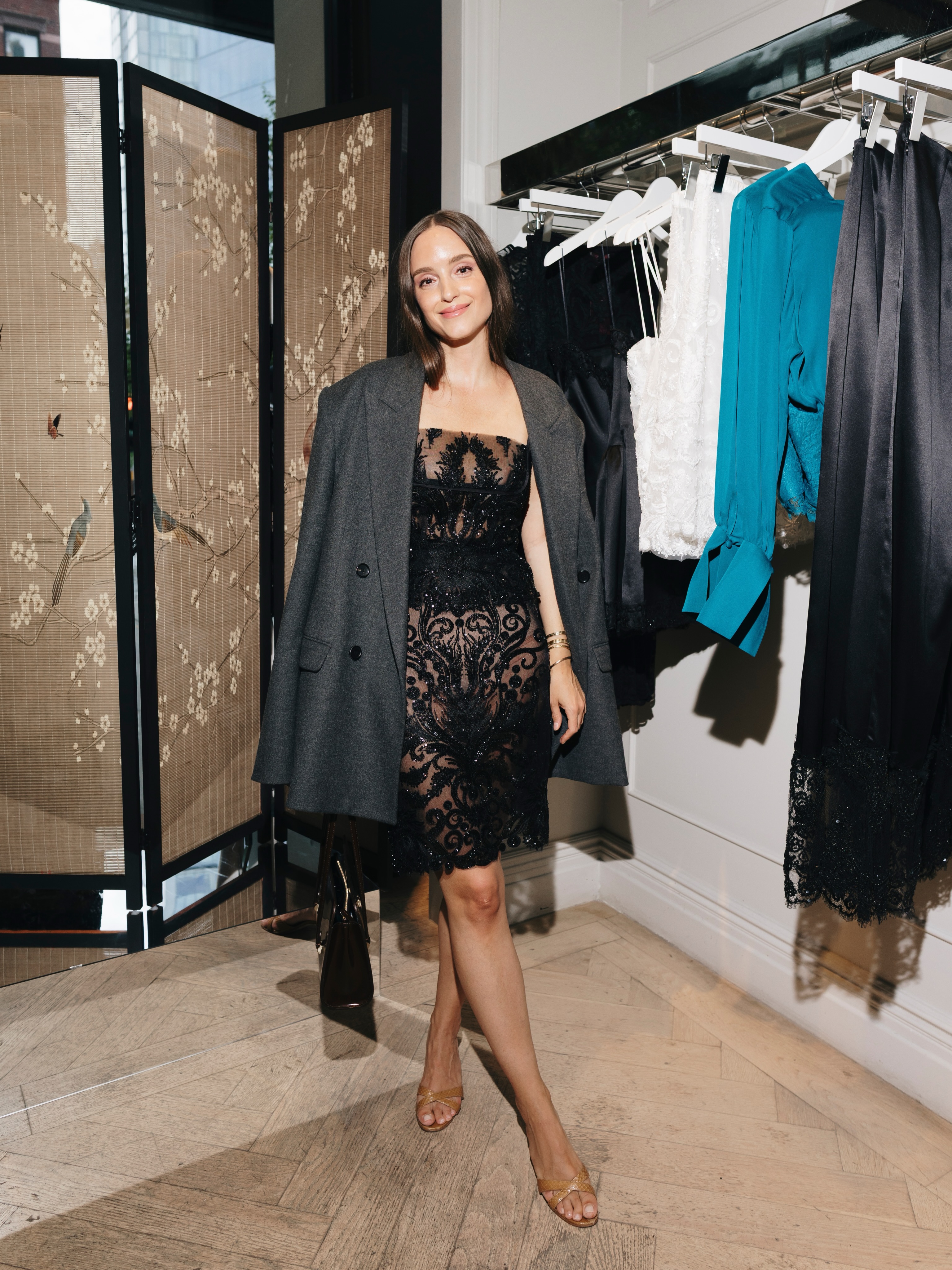
Dresses fell to 22.0% of outfits, −3.86 pp versus baseline. Black remains the largest current labelled dress color at 27.2%.
Watch and test: Keep black occasion dresses visible, but use shallow receipts and fast reads on conversion and sell-through before committing broader dress depth.
4. Use white tops as the connector
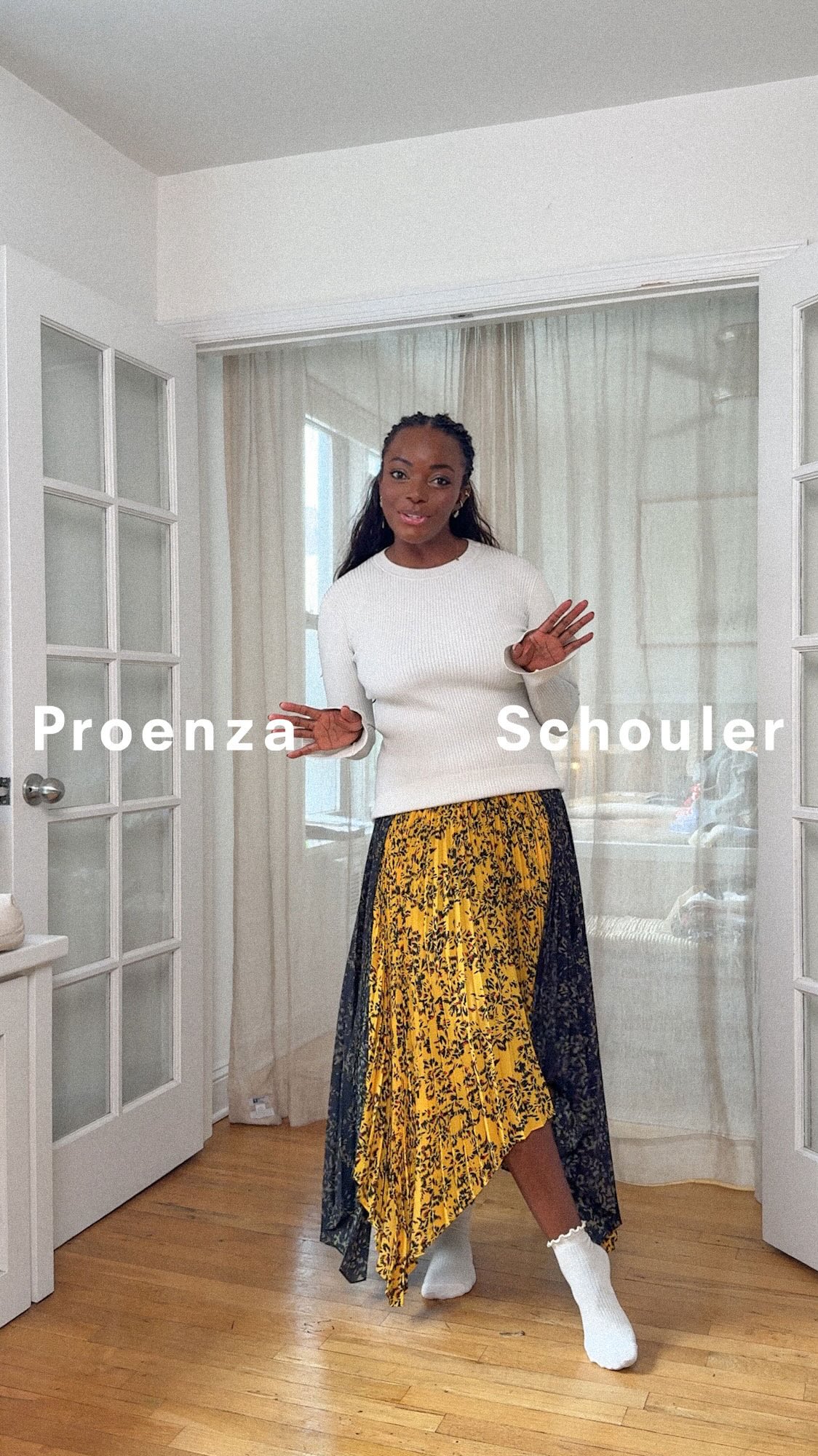
Tops appear in 67.3% of outfits; white leads labelled top observations at 42.6%. The category’s +2.94 pp difference is below the effect floor.
Bundle: Connect white knits and shirts to the outerwear and bag stories. Treat tops as a descriptive anchor, not a newly qualified movement.
Merchant action board
- Promote: black bags within outerwear-led edits.
- Bundle: white tops with black outerwear and bags.
- Restock: proven outerwear in measured depth.
- Test: black versus brown outerwear and shallow black dress capsules.
- Watch: accessories and dresses before widening receipts.
Methodology and confidence
Exact audience: women-labelled eligible looks only; male, non-binary, unknown, and other gender labels are excluded. Period: Monday 7 September through Sunday 13 September 2026. The full week reconciled at 1,528 canonical eligible reference posts and 1,528 distinct flat-slice posts, with no missing or extra IDs. The women’s audience reconciled at 1,281 eligible posts and 1,281 flat-slice posts.
After source controls, canonical outfit deduplication, and a maximum of four distinct outfits per creator per week, the analytical slice contains 915 posts, 1,136 deduplicated outfits, 392 creators, 3,883 known-category observations, and 3,429 color-labelled observations. The seven-week baseline is 20 July–6 September 2026 and contains 7,039 women’s outfits.
Category-share movements use cluster-aware two-proportion tests with Benjamini–Hochberg false-discovery control at q≤0.10, a 3 pp effect floor, minimum observation counts, and a 20-creator current-week breadth rule. The full corpus refresh completed after the report period on 14 September 2026 at 10:18:04 UTC.
All four images are current-week women’s corpus examples from distinct creators. Each image and credit links to the exact original post. Images illustrate nearby claims qualitatively; they are not the statistical sample and do not establish sales demand. This is creator-content intelligence, not a sales forecast.