
Report week: 17–23 August 2026 · Audience: men’s fashion only
This report is calculated from a fully reconciled, single-gender slice of the TrendQ corpus. The sample clears the normal-report threshold, but no men’s category-share movement passed the statistical publication gate. Every comparison below is expressed in percentage points, not growth.
Executive merchant read: Keep the men’s assortment anchored in tops, accessories, bottoms, and shoes. Use current color leaders to sharpen presentation, but hold broad category buys steady until a qualified movement appears.
Signal table
| Category | Current vs seven-week baseline |
|---|---|
| Tops | 92.9% (118/127) vs 88.4% (1,040/1,177); +4.55 pp · Not qualified, 58 creators, q=0.366 |
| Accessories | 87.4% (111/127) vs 83.5% (983/1,177); +3.88 pp · Not qualified, 53 creators, q=0.516 |
| Outerwear | 37.8% (48/127) vs 34.1% (401/1,177); +3.73 pp · Not qualified, 36 creators, q=0.602 |
| Bags | 4.7% (6/127) vs 10.6% (125/1,177); −5.90 pp · Not qualified, only 6 creators |
| Shoes | 48.0% (61/127) vs 49.9% (587/1,177); −1.84 pp · Below effect floor |
| Bottoms | 78.7% (100/127) vs 78.4% (923/1,177); +0.32 pp · Below effect floor |
Baseline: the seven complete weeks from 29 June–16 August 2026. Shares use deduplicated outfits as the denominator. A qualified movement requires an absolute change of at least 3 pp, sufficient counts, at least 20 current creators, and Benjamini–Hochberg FDR q≤0.10.
Category and color breakdown
The week contains 444 category observations across 127 deduplicated outfits. Of those, 424 category observations carry at least one usable color label. Color percentages are current-week, within-category multi-label shares; they are descriptive and not movement claims.
| Category | Leading current colors | Color-labelled observations |
|---|---|---|
| Tops | White 39.8%; black 21.2%; brown 12.7% | 118 |
| Accessories | Black 65.9%; brown 20.9%; beige 12.1% | 91 |
| Shoes | Black 47.5%; white 26.2%; brown 19.7% | 61 |
| Outerwear | Black 22.9%; white 14.6%; light gray and navy 10.4% each | 48 |
| Bottoms | Black 22.0%; white 19.0%; blue 11.0% | 100 |
| Bags | Sample too small for a color action | 6 |
1. Promote white shirts inside a stable top-led offer
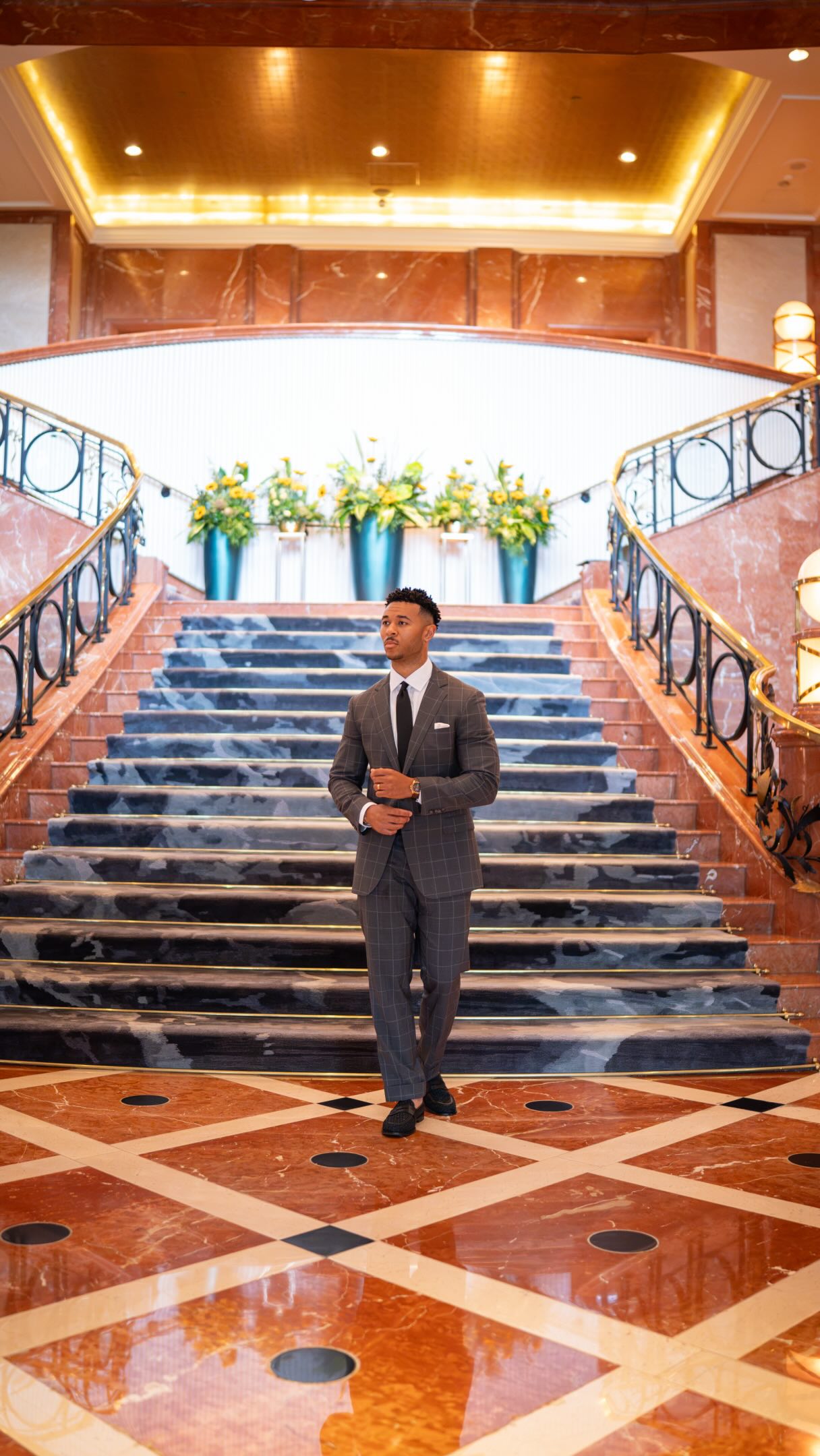
Tops appear in 92.9% of men’s outfits, and white leads their labelled palette at 39.8%. The +4.55 pp comparison did not pass false-discovery control.
Promote: Keep white shirts and tees prominent across tailoring and casual outfit modules, using the current category scale rather than an unqualified movement claim.
2. Bundle black accessories as the clearest finishing layer

Accessories appear in 87.4% of outfits; black is the leading labelled accessory color at 65.9%. The +3.88 pp comparison is descriptive because it did not pass the statistical gate.
Bundle: Attach black sunglasses, belts, and other finishing pieces to white-top and black-shoe looks, then track attachment rate.
3. Restock proven black shoes, not the whole category
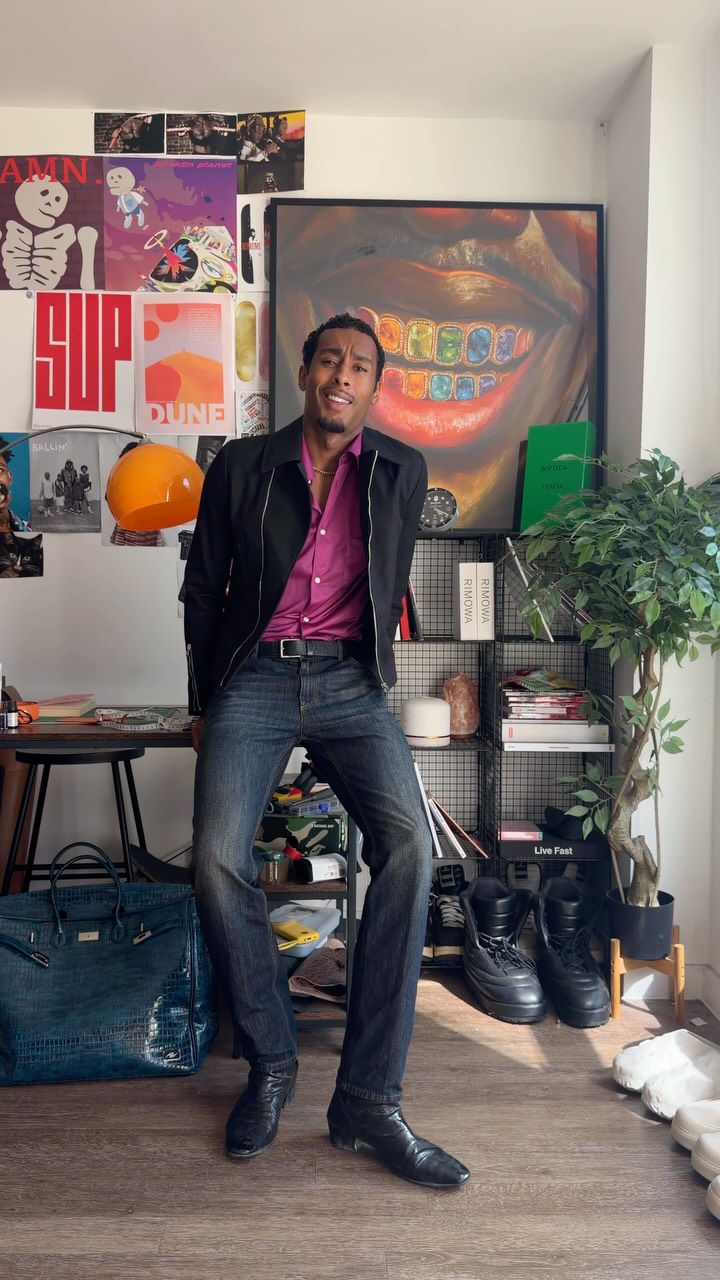
Shoes appear in 48.0% of outfits, −1.84 pp versus baseline, while black leads the current labelled shoe palette at 47.5%.
Restock selectively: Protect proven black ankle boots and dress shoes where store demand supports them; do not expand total shoe receipts from the content mix alone.
4. Test black outerwear stories in shallow depth
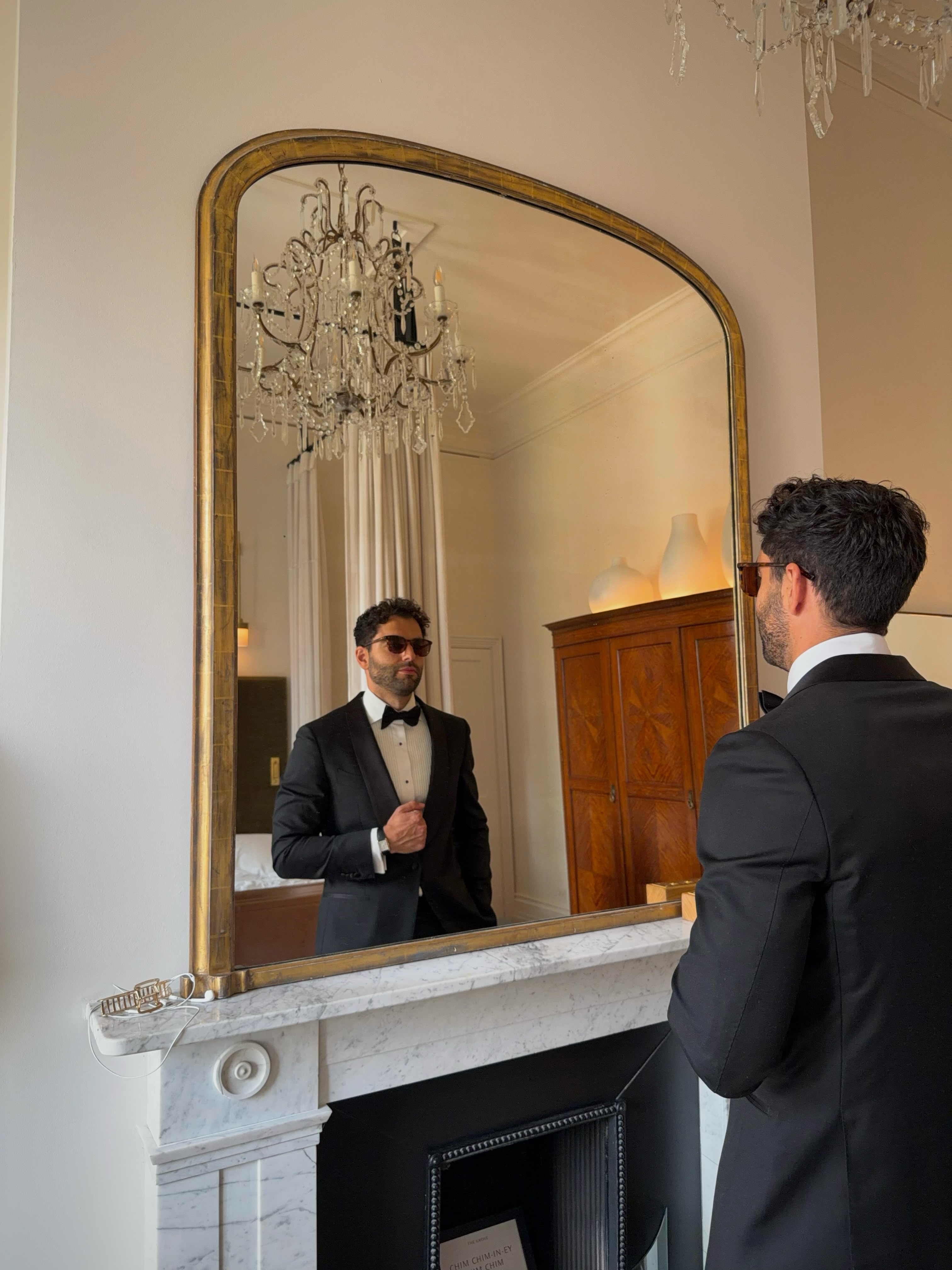
Outerwear appears in 37.8% of outfits and black leads its labelled palette at 22.9%. The +3.73 pp comparison did not pass false-discovery control.
Test: Use shallow black tailored-jacket and lightweight-layer capsules. Let click-through, conversion, sell-through, stock, and returns determine whether to add depth.
Merchant action board
- Promote: white tops as the broadest current outfit anchor.
- Bundle: black accessories and black shoes into complete-look modules.
- Restock: proven black footwear only where demand confirms it.
- Test: black outerwear in shallow depth.
- Watch: bags; only six current creators support the category, so no quantitative action is warranted.
Methodology and confidence
Exact audience: men-labelled creator profiles only; unknown and other gender labels are excluded. Period: Monday 17 August through Sunday 23 August 2026. The full week reconciled at 838 eligible reference posts and 838 distinct flat-slice posts, with no missing IDs. The men’s audience reconciled at 132 canonical eligible posts and 132 flat-slice posts.
After statistical eligibility, canonical outfit deduplication, and a maximum of four distinct outfits per creator per week, the analytical slice contains 124 posts, 127 deduplicated outfits, 61 distinct creators, 444 category observations, and 424 color-labelled category observations. The seven-week baseline is 29 June–16 August 2026 and contains 1,177 men’s outfits.
Category-share movements use two-proportion tests with Benjamini–Hochberg false-discovery control at q≤0.10, a 3 pp effect floor, minimum observation counts, and a 20-creator current-week breadth rule. No men’s category movement qualified. The corpus refresh and fashion extraction completed after the report period on 24 August 2026 at 21:16 UTC.
All four images are current-week men’s corpus examples from distinct creators. Each image and credit links to the owner’s exact original post. Images illustrate nearby claims qualitatively; they are not the statistical sample and do not establish sales demand. This is creator-content intelligence, not a sales forecast.